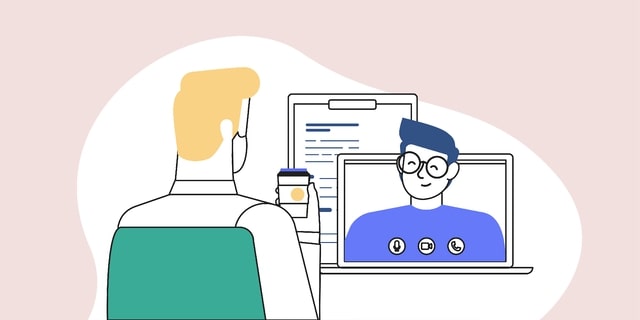


Interviews matter. A good interview is the foundation of good reporting. They are the best way of understanding a complicated situation and seeing it from someone else's perspective. A wise, old editor of mine used to say 'report it out.' She meant 'go talk to people, don't rely on your own opinions and judgment.' It's a good maxim.
Here's how to interview someone like a journalist:
- Do your preparation. Choose the right format (face-to-face or on the phone), do your research and manage the expectations of whoever is involved. Don't send questions in advance - you want their organic reactions, not potted quotes.
- Run the interview. Keep control over the flow of conversation, listen hard and be yourself. This is an exercise in curiosity.
- Follow-up. Say thank you. The interviewee gets to see the copy your interview has informed. It's only polite.
Let's go through that in more detail:
Preparation
1. Choose the right format
Sometimes a face-to-face interview is good. More often, for me, a phone interview works best.
2. Get face to face
For a feature about an individual, I like to do several face-to-face interviews. The first is really a get-to-know session without notes and off the record. It is a reconnaissance. Then the major interview. Finally a follow-up interview around the time I'm writing the piece to clarify any missing points and minor details.
3. Consider phone interviews
I love phone interviews. There's something confessional about them and it's easy to strike up a rapport with someone.
I type quickly enough to take a more or less real time transcript during a phone interview which makes this form of interview particularly efficient. Also, a phone interview cuts out travel time and waiting around for people to turn up.
Talking on the phone makes interviews much easier to schedule as most people can find 20 or 30 minutes in their diary but a face-to-face interview seems to require an hour and a lot more commitment.
4. Avoid email interviews
I've done two or three email interviews in my time and they've all been unsatisfactory. The results have been stilted and unnatural, and you miss out on important things like tone of voice.
5. Have a backup
For face-to-face interviews, I prefer to use two recorders or one recorder and hand written notes. Nothing could be worse than getting back from an interview and finding that you didn't have any record.
Mind you, I ended up spending 15 minutes of an interview with Google's Sergey Brin talking about digital Dictaphones instead of Google's future. Oops.
6. Have enough time
I was once promised an hour-long interview. On the day, the PR involved said it would have to be a 15 minute phone interview. However, left to my own devices, I would have pulled out altogether.
7. Manage PR people
PR minders are a frequent nuisance for journalists. They're helpful when they book up an interview and make sure that the people turn up. However, I find their silent presence on phone interviews oppressive and I suspect that it intimidates the interviewee as well.
8. Don't give questions in advance
I don't prepare questions in advance and I always say no to people who ask me to send them a list of questions. Partly, this is because I don't work that way and partly I don't want people over-preparing.
My interviews tend to be quite free-ranging. Journalists rarely (if ever) give copy approval to interviewees but when interviewing for corporate work (like a Copywriter would), it is the rule.
9. Avoid group interviews
An interview is essentially a one-to-one situation but many interviewees like to have a colleague in on the interview. Often they do this if they feel that their technical knowledge isn't up to scratch.
If I interview two people, it becomes harder to properly attribute quotes. Also, you miss out on potentially valuable contributions. Only one person can talk at a time. I would rather do two separate interviews.
10. Prepare and research in advance
I don't usually prepare a list of questions, although I'll usually have a list of topics to cover. I also like to look up the interviewee on LinkedIn and Google as this can reveal interesting angles for questions and common ground to build rapport.
I have an interview template in OneNote and I usually set this up before the interview with all the contact information and some initial thoughts and topics for the interview.
11. Avoid the word 'interview'
Most people think an interview is a scary thing. They think of job interviews or the kind of TV interviews that politicians do. Neither model works for a good journalistic interview.
I prefer the words 'chat', 'conference call' or 'conversation'.
12. Confirm the time and date in advance and send reminders
People sometimes don't turn up for interviews. This is why I prefer sending a meeting request from Outlook or using Calendly to book up the call. It's also helpful to send an email reminder the day before.
The interview itself
1. Introduce yourself
I like to introduce myself at the start of every interview. I tell people who I am and who I'm writing for. I call it the Government health warning. It's a courtesy but it's also a kind of protection. Doing it consistently means that any interviewee knows exactly where they stand.
2. How to record interviews
I do interviews using RingCentral and record them for future reference. I use a Plantronics headset so I can also take notes during the call.
3.Observe the legalities
In the UK, you have to tell people you're recording a conversation because of the Regulation of Investigatory Powers Act, or RIPA as it is charmingly known.
I tend to say 'I'm keeping a record of this conversation to make sure I don't forget anything.' Even if it weren't a legal obligation, I think it is a courtesy to say so. I don't record all my interviews.
4. Be yourself
My interview style is discursive, subjective and personal. My favourite interviews are the ones where I find common ground with the person I'm talking to and we have a fun, stimulating conversation. This means I have to come to the party dressed as myself.
I interviewed Stephen Bungay a while ago for this blog and I had expected to chat for an hour. We ended up talking for four hours.
5. Be enthusiastic
People like people who like them. They are also conditioned to think of an 'interview' as a potentially hostile situation and be on their guard. Consequently, you should be upbeat and positive. Do this genuinely if you can. Otherwise, engage your sincerity simulator.
6. Shut up
You should be talking about 10-20 percent of the time at most. (This is my biggest weakness - I often end up talking too much and interviewing myself!)
7. Listen hard
Sometimes you can pick up a word or a phrase in an answer which you can play back to the interviewee and get something much more intimate, interesting or honest. Interviews aren't scripted Q&As, they are intense professional conversations and you need to concentrate.
8. Capture the basic information
I use a template form for all my interviews that captures: name (get the spelling right), job title, contact details, time and date of interview and intended publication.
9. Job titles can be difficult
Sometimes people have very long-winded or obscure titles. These don't work well on the printed page. If this is the case, I like to get a more informal job description agreed with the interviewee.
Tech companies are notorious for acronym-laden job titles. The important thing is to get the interviewee's agreement to whatever you use. I like to ask: 'how would you like me to describe you in the article.'
10. Get past the canned speech
If an interviewee has been media trained, my heart sinks. Usually, it means I have to listen to 10-20m of self-important waffle prepared for them by their PR department.
Building a rapport with them on non-controversial subjects (like their job title or their recent career history) can put them at their ease. I'm not trying to trick people into saying something they don't want to say. I just want them to say something in a natural, human way.
A good interview sounds like an intelligent conversation over coffee not a standup PowerPoint presentation.
11. Don't lose control
Sometimes, especially with self-important interviewees, you can get into a bit of a tug-of-war over who is in charge of the interview. Never forget that you are the CEO of the interview.
You don't have to be bossy but it's important that you get what you need from the interview and you steer it in the direction you want to go.
12. Focus on what you need
Sometimes people get absorbed in details or get too waffly and abstract. Sometimes you need a specific quote or a good story. A timely intervention is sometimes required to redirect the interview.
Phrases like 'do you have any stories that illustrate that point,' or 'how does this relate to the bigger picture' can be very useful ways to do this.
13. Ask the good stuff
We've put together a list of useful questions you can use in almost any interview scenario. Start to build your own list (you can pinch our questions to get you started if you like!)
- How did your product/service first come about?
- How has your product/service changed over the years?
- What have been some of your biggest challenges?
- What have been some of your biggest successes?
- How do you deal with complaints about your product/service?
- What are the most common complains about your product/service?
- How does X topic relate to your latest offer?
- What is your opinion on X law/legislation and how it affects your business?
- What one piece of advice would you give yourself (if you could) at the beginning of your journey?
- What is your 5/10/15 year goal for the business?
- If you had a crystal ball - what do you think will be the biggest change/disruption in your industry this year?
14. Respect the interviewee's privacy
I don't like to share them with anyone else. I know this is an ironic position but corporate clients often ask for the transcript as well as the finished article.
There are three problems with this. First, redacting a transcript for public consumption is a task in itself, not a freebie. Second, it encourages clients to start rewriting my piece. Third, it's not fair to the interviewee because an interview has some usable bits and a lot of filler.
15. Be courteous
Say thank you afterwards. If you can provide a copy of the final article, do so.
Sidebar - One of my rules of thumb is to do one interview for each 250-500 words of final copy. Of course, your mileage may vary and I'm keen to hear any other suggestions. (See also how to give a good interview and why interviews go wrong.)
Interviews, journalists and content marketing
A good interview is a good conversation. Nothing more, nothing less. Yes, there are journalist formalities to follow, but interviews should be fun and friendly, and I try hard not to view them as 'work', so to speak.
In this age of content-driven marketing, interviews are your key differentiator. Whether you're a journalist, Copywriter or Content person, it's the real-world research you do that will make your writing valuable, unique and authoritative.
Desk research will only get you so far...

This article has lived a life. It first came into being in 2006, was substantially updated in 2016 and has been reviewed and updated once more in 2022.
 Matthew Stibbe
We recommend reading these articles, next...
3 brand marketing strategies to elevate your edtech brand in 2024
Learn how to champion your expertise and add value to your audience with these marketing strategies...
4 steps to identify and fill skills and resources gaps in your business
Differentiate your business on the basis of talent. Here's how to ensure you have skills and...

How to build a brand community and embrace your tribe
Building a strong brand means not only strengthening the bonds between brand and buyer, but also...